
That sticky feeling in a back bedroom, condensation on windows, and a basement that never quite smells fresh can all point to one issue: too much moisture indoors. Whole house dehumidifier cost is often the first question Central Kentucky homeowners ask, and the honest answer is that it depends on the home, the humidity problem, and how the equipment must be installed. A properly sized system is an investment in everyday comfort, cleaner-feeling air, and better protection for your home.
For most homes, a professionally installed whole-home dehumidifier commonly falls in the range of $2,500 to $5,500. More involved jobs can run higher, especially when ductwork, electrical work, or a new drainage route is needed. The lowest bid is not always the better value if it skips the sizing, drainage, and airflow details that make humidity control work.
What Affects Whole House Dehumidifier Cost?
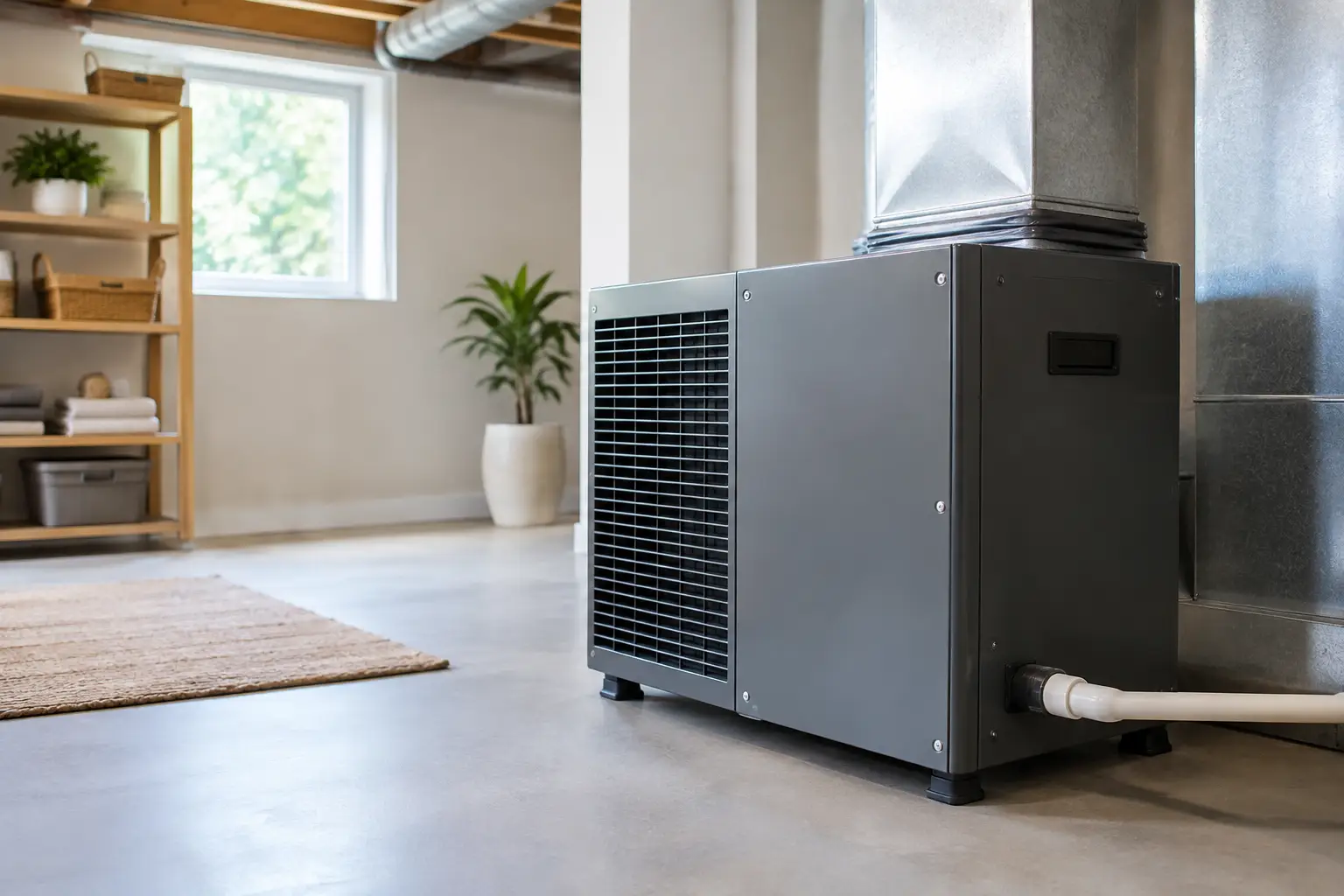
A whole-home unit works with your HVAC system or through dedicated ductwork to remove moisture from the air throughout the home. Unlike a portable dehumidifier that handles one room and needs frequent emptying, it drains automatically and treats a much larger area. That convenience is part of the price, but installation conditions matter just as much as the equipment itself.
Capacity and home size
Dehumidifiers are rated by how many pints of water they can remove from the air in a day. A smaller, tightly built home with a mild moisture issue may need a lower-capacity unit. A larger home, a home with a damp basement, or a household that regularly sees indoor humidity above 55% may need a more powerful model.
Bigger is not automatically better. An oversized unit can cost more upfront and may cycle in a way that does not match the home’s airflow needs. A qualified technician should consider square footage, ceiling height, basement conditions, insulation, number of occupants, and how much moisture is actually present before recommending capacity.
Ductwork and installation layout
The most straightforward installation connects the dehumidifier to existing HVAC ductwork near the air handler. If there is adequate space, good access, and a practical return and supply connection, labor costs stay more predictable.
Costs can rise when a home has limited mechanical-room space, an unfinished basement with challenging access, older ductwork, or a layout that requires new duct runs. Some homes are better served by a dedicated ducted setup, especially when the basement or a particular area needs extra attention. The right layout should improve whole-home circulation without putting unnecessary strain on your heating and cooling system.
Drainage requirements
Every dehumidifier needs a reliable way to send collected water out of the home. A nearby floor drain or properly sloped condensate line is usually the simplest option. If the unit sits below the available drain or far from a suitable connection, it may need a condensate pump and additional tubing.
This is not a small detail. A poorly installed drain can lead to water damage, system shutdowns, or a unit that simply is not removing moisture when you need it most. A complete estimate should explain where the water will go and how the drain line will be protected and tested.
Electrical work and controls
Many whole-house dehumidifiers can use existing electrical service, but some installations require a dedicated outlet or circuit work. Modern systems also include controls that let you set a target humidity level, often around 45% to 50% for comfortable living spaces.
Some homeowners choose integrated controls that communicate with their HVAC system, while others prefer a separate wall-mounted humidistat. Either can work well when installed correctly. The key is having a control strategy that prevents the home from becoming clammy without making the system run more than necessary.
Typical Costs You May See on an Estimate
A fair proposal usually separates the major pieces of the job rather than offering a vague, one-line number. Equipment commonly accounts for a significant share of the price, while labor reflects the duct connections, drainage, electrical needs, startup, and testing.
For a relatively simple installation, homeowners may see equipment and installation toward the lower end of the typical range. A larger-capacity unit with new duct connections, a condensate pump, electrical modifications, or difficult crawl-space access can move the project toward the upper end. If major duct repairs are needed, those should be clearly listed as a separate part of the work.
Ask whether the quote includes removal of any old equipment, new supply and return transitions, a drain trap where appropriate, insulation for any exposed lines, startup testing, and instructions for changing or cleaning the filter. These details help you compare estimates on the actual work being performed, not just the model number.
When Is a Whole-Home Unit Worth the Cost?
Kentucky summers bring more than heat. Warm, humid outdoor air can make a home feel uncomfortable even when the thermostat is set low. Homeowners sometimes turn down the AC again and again, only to see higher utility bills without solving the sticky air. A dehumidifier lets the air conditioner focus on cooling while the dehumidifier handles excess moisture.
The upgrade can make particular sense if you notice persistent musty odors, clammy sheets, condensation on windows, warped wood, or a basement that feels damp after rainy weather. It can also help households that want better indoor air quality. Lower humidity makes the home less welcoming to mold growth and dust mites, although a dehumidifier is not a substitute for fixing active water leaks, foundation drainage problems, or visible mold.
There is a trade-off: the unit uses electricity, and it needs periodic filter maintenance. Still, many homeowners find that better humidity control allows them to feel comfortable at a slightly higher thermostat setting during summer. Actual savings vary by home and cannot be promised without evaluating the system and the home’s conditions.
How to Avoid Paying for the Wrong Solution
Before installing any dehumidifier, make sure the moisture source has been considered. A wet crawl space, leaking ductwork, plumbing leak, poor grading, or an oversized air conditioner can create humidity symptoms that deserve attention. Installing equipment without diagnosing the problem can mean paying for a machine that has to work harder than it should.
A good HVAC assessment includes humidity readings in key areas, a look at existing airflow, and a conversation about when the problem occurs. Is the basement damp year-round? Does the home feel sticky only during cooling season? Did the issue start after a renovation or an HVAC replacement? Those answers help determine whether a whole-home system, targeted basement dehumidification, duct repairs, or another improvement makes the most sense.
It is also smart to ask about ongoing maintenance. Filters need attention, drain lines should be checked, and the system should be inspected as part of regular HVAC care. Keeping it maintained protects its capacity and helps prevent surprise drainage issues during the most humid part of the year.
Get a Quote Built for Your Home
A whole-house dehumidifier should not be a guess based solely on square footage or a quick online price. The right capacity, drainage plan, duct connections, and controls are what turn the equipment into dependable comfort for your family.
For homeowners across Central Kentucky and Kentuckiana, Instant Aire Heating & Cooling can evaluate your home’s humidity concerns and provide a clear recommendation based on the conditions you are actually living with. Ask for a detailed estimate, review the available financing options if needed, and choose a solution that keeps your home comfortable long after the summer air turns heavy.