
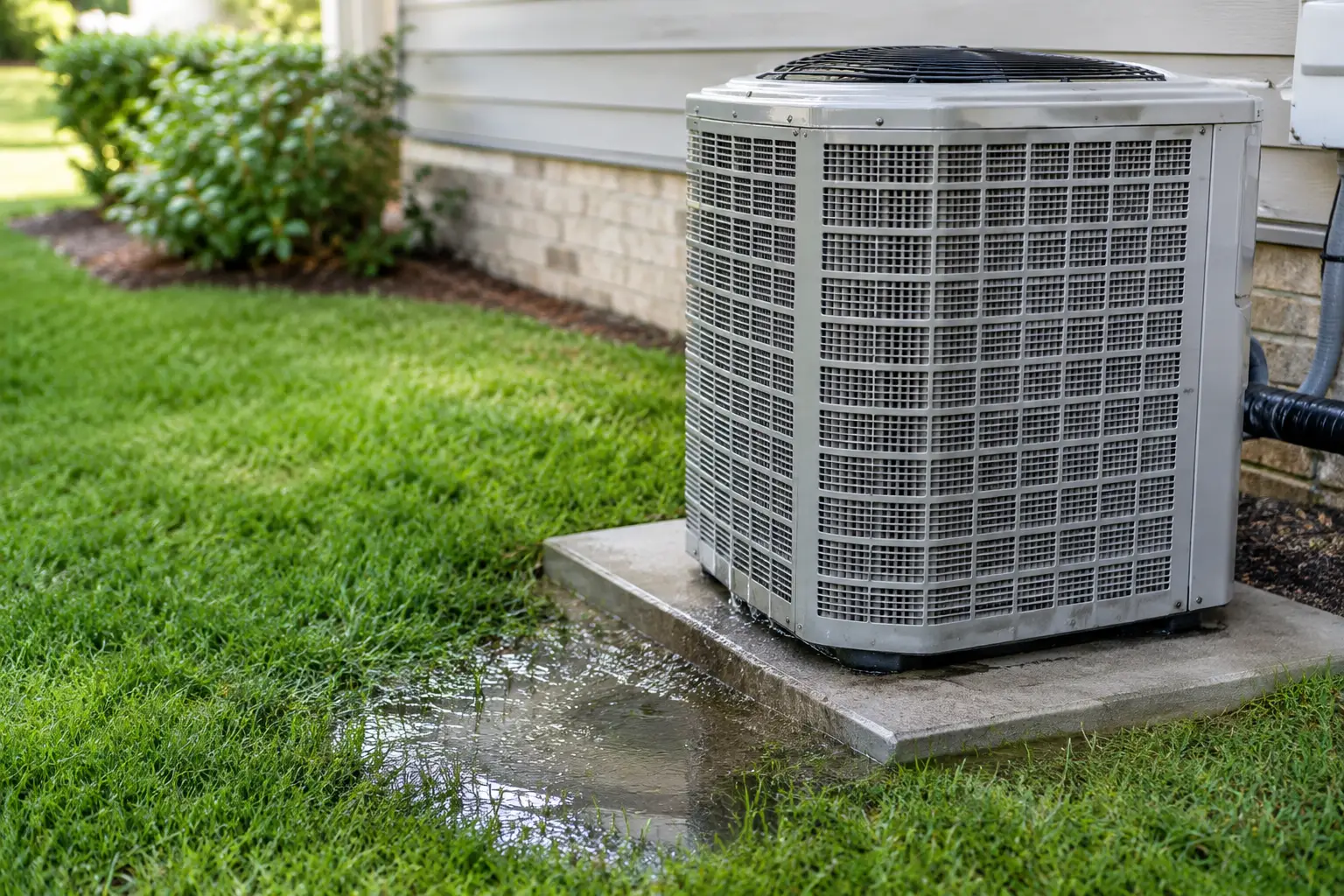
A puddle near your indoor AC unit can turn a comfortable Kentucky afternoon into a stressful cleanup fast. An AC leaking water does not always mean the system is finished, but it does mean something needs attention. Water can damage flooring, drywall, insulation, and belongings long before a small drip becomes a major problem.
The good news is that many air conditioner leaks begin with a fixable drainage issue. The key is knowing when you can safely take a quick look, when to turn the system off, and when it is time to bring in an HVAC technician.
Why Is My AC Leaking Water?
Your air conditioner removes humidity from indoor air as it cools your home. That moisture collects on the indoor evaporator coil, then drains through a condensate line to a safe location outside or near a floor drain. In Central Kentucky, where summer humidity can be heavy, that drainage system does plenty of work.
If water is appearing around the indoor unit, it usually means the condensation is not making it where it should. The most common cause is a clogged condensate drain line. Dust, algae-like buildup, mildew, and debris can restrict the line until the drain pan fills and overflows.
A clogged line is common, but it is not the only possibility. A dirty air filter can reduce airflow across the evaporator coil, causing the coil to freeze. When the ice melts, the amount of water can overwhelm the drain pan. A refrigerant issue, damaged drain pan, disconnected drain line, failed condensate pump, or improper installation can create the same unwelcome puddle.
What to Do First When Your AC Is Leaking Water
Start by protecting your home. If water is actively dripping from the air handler, furnace cabinet, ceiling, or nearby vents, turn the cooling system off at the thermostat. If water is close to electrical components, avoid touching the equipment and switch off the HVAC breaker only if you can safely reach it without stepping in water.
Then place towels or a shallow container around the leak to limit spread. Move rugs, boxes, furniture, or valuables away from the area. Do not keep running the AC just because it is still blowing cool air. The longer the system operates with blocked drainage or a frozen coil, the more water damage it can cause.
Check the air filter next. If it is visibly gray, matted, or overdue for replacement, install a clean filter with the correct size and airflow rating. A filter change may not instantly stop a leak, especially if the coil has frozen, but it can correct one of the conditions that caused it.
If you see ice on refrigerant lines, the indoor coil, or inside the cabinet, leave the system off and let it thaw. Switch the thermostat fan setting from Auto to On if you want to help move room-temperature air across the coil. Do not chip at the ice or pour hot water onto HVAC components. Once it thaws, the cause of the freeze still needs to be identified before the AC is returned to normal use.
A Clogged Condensate Drain Line Is Often the Culprit
Many homeowners can spot the signs of a blocked drain line before water spills out. You may notice a musty odor near the unit, standing water in the drain pan, a float switch that shuts off the AC, or water around the indoor equipment after long cooling cycles.
Some systems have a visible PVC drain pipe with an access cap near the air handler. If you are comfortable doing so, you can remove the cap and inspect for obvious water or debris. A wet/dry vacuum connected to the outdoor end of the drain line can sometimes pull out a minor blockage.
Be cautious with chemical drain cleaners. Harsh products can damage drain components, create fumes, and do little for a stubborn blockage farther along the line. Vinegar or a cleaning solution approved for condensate drains may help as part of routine maintenance, but it will not repair a cracked pan, improper drain slope, or failed pump.
If the line keeps clogging, it is worth having a technician clean it thoroughly and check the full drainage setup. Recurring clogs often point to more than a one-time buildup.
Other Reasons an AC Leaks Water Indoors
A frozen evaporator coil
Low airflow and low refrigerant can both make the evaporator coil freeze. A dirty filter, blocked return vent, dirty coil, failing blower motor, or closed supply registers may restrict airflow. Refrigerant is different: it should not get used up during normal operation. If the refrigerant charge is low, there may be a leak that needs professional diagnosis and repair.
A cracked or rusted drain pan
Older systems may have a primary drain pan under the coil and a secondary pan beneath the unit. Metal pans can rust, while plastic pans can crack. Since the damage may be hidden inside the equipment cabinet, this is usually a job for a trained technician.
A failed condensate pump
Homes with basements, finished spaces, or equipment located away from a gravity drain may use a condensate pump. The pump moves collected water upward and out through a discharge line. If it loses power, becomes clogged, or fails mechanically, water can back up quickly.
An installation or ductwork issue
An air handler that is not level, a drain line with the wrong slope, or an uninsulated cold duct sweating in a humid attic can all look like an AC water leak. These problems require a careful inspection because the water may not be coming from the condensate pan at all.
When to Call for AC Repair Right Away
A small amount of moisture near an outdoor unit can be normal. Water pooling around your indoor system, dripping through a ceiling, or returning after you replace the filter is not. Schedule professional AC service promptly if you notice any of these situations:
- The unit has frozen or repeatedly develops ice.
- Water is reaching electrical wiring, outlets, or the furnace cabinet.
- The leak comes from a ceiling, attic, wall, or finished living space.
- Your AC stops cooling, cycles off unexpectedly, or makes unusual noises.
- You clear visible debris but water continues to back up.
Fast service matters because water damage does not wait for a convenient time. A technician can clear the drain, inspect the coil and pan, test the pump, verify refrigerant performance, and make sure the system drains correctly before the next humid day puts it under pressure.
Can You Keep Using the AC?
It depends on the cause and where the water is going. If the leak is minor, contained, and clearly related to a dirty filter, you may be able to restart the system after replacing the filter and allowing any ice to thaw. Watch it closely during the next cooling cycle.
If water is overflowing, the system is frozen, or you do not know where the water is coming from, keep it off until it is inspected. Running it can turn a manageable repair into damaged ceilings, mold-friendly moisture, or a bigger HVAC failure. During hot weather, use fans, close blinds, and keep doors shut to hold onto cooler indoor air while you wait for service.
How to Prevent Another AC Water Leak
Regular maintenance is the best defense against drainage trouble. Replace filters on schedule, keep supply and return vents open, and avoid storing items against indoor equipment. Annual cooling maintenance gives a technician the chance to clean the condensate drain, inspect the drain pan, check airflow, and catch refrigerant or electrical concerns early.
For families across Central Kentucky and Kentuckiana, that preventive visit can be especially valuable before the sticky summer season arrives. Instant Aire Heating & Cooling can help homeowners identify why a system is leaking and restore dependable comfort without unnecessary complications.
A dry floor around your HVAC equipment is easy to overlook, but it is one of the simplest signs that your air conditioner is doing its job the right way. When that changes, act early and give your home the protection it deserves.