
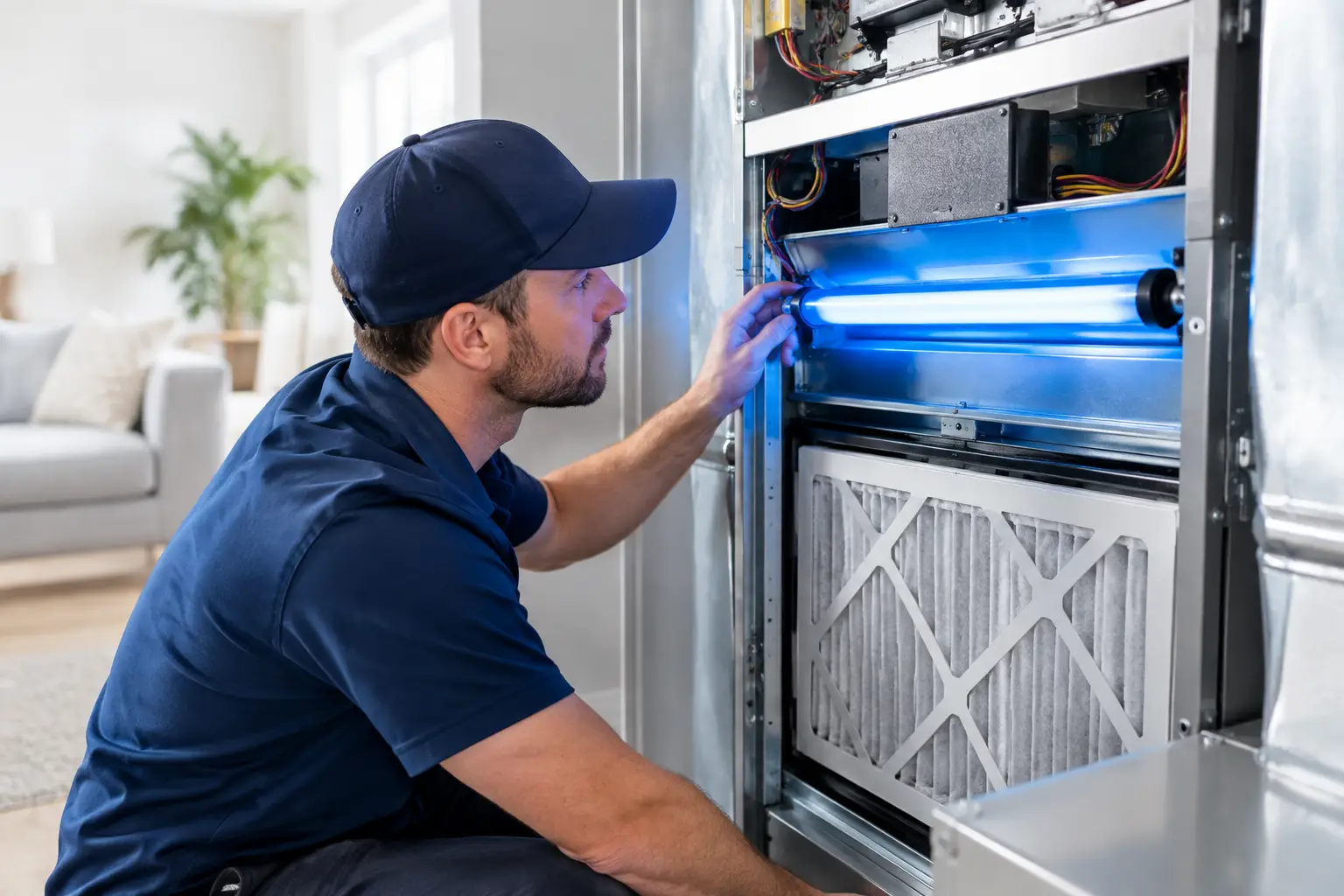
That musty smell when the AC kicks on is more than an annoyance. In Central Kentucky, long humid summers can create ideal conditions for moisture and microbial growth around an air conditioner’s indoor coil and drain pan. HVAC UV light benefits can be meaningful in the right application, helping keep key parts of your system cleaner while supporting fresher indoor air for the people under your roof.
A UV light is not a miracle cure for every allergy symptom, odor, or air-quality concern. But when it is properly selected and installed, it can be a practical addition to a well-maintained heating and cooling system.
What an HVAC UV Light Actually Does
Most residential HVAC UV lights use UV-C energy, a type of ultraviolet light that can disrupt the DNA or RNA of certain microorganisms. Inside an HVAC system, that energy is used to limit the growth of mold, bacteria, and other microbial contaminants on surfaces or in moving air.
The most common installation places a UV lamp near the evaporator coil – the cold indoor component that removes heat and humidity while your AC runs. Because the coil and nearby drain pan handle condensation, they can stay damp for extended periods. A UV light aimed at this area helps keep those components cleaner between maintenance visits.
Some systems are designed for treatment of air as it passes through ductwork. These can be useful in specific homes, but their effectiveness depends on airflow speed, lamp intensity, exposure time, and installation location. Air moves quickly through a typical residential system, so an airstream UV light is not the same as treating a room with a portable device.
The Most Useful HVAC UV Light Benefits
For many homeowners, the biggest benefit is cleaner equipment. When microbial buildup develops on an indoor coil, it can contribute to odors, restrict airflow, and make routine cleaning more difficult. Keeping the coil area cleaner may help your system operate more consistently, especially during Kentucky’s sticky cooling season.
Reduced Microbial Growth on Wet HVAC Components
A coil-mounted UV light continuously shines on the surfaces where moisture tends to collect. That makes it particularly helpful for systems with recurring biological buildup around the coil, drain pan, or condensate line.
This does not mean your HVAC system will never need cleaning. Dust, pet hair, and other debris still collect, and the drain still needs to be checked. The light simply gives your system an added layer of protection in one of its dampest, hardest-working areas.
Fresher-Smelling Air When the System Runs
If your home has a lingering damp or musty odor that seems strongest when cooling starts, buildup around the coil may be part of the problem. A UV light can help address the source when microbial growth is involved.
Odors have many possible causes, though. Dirty filters, wet insulation, duct contamination, a clogged drain, plumbing issues, and high indoor humidity can all play a role. A technician should identify the source before recommending a solution. Installing a UV light without solving an active moisture problem will not deliver the result you want.
Potential Support for System Performance
A clean evaporator coil transfers heat more effectively than one coated in grime or buildup. When the coil stays cleaner, airflow and heat transfer may be easier for your equipment to maintain. That can support efficient operation and help reduce the strain that comes with a dirty indoor coil.
The word “may” matters here. A UV light alone will not lower utility bills overnight, and it cannot compensate for a failing compressor, leaking ductwork, an undersized system, or a clogged filter. Its performance value is tied to preventive care: clean filters, seasonal tune-ups, proper drainage, and correct airflow.
Extra Help for Homes With Specific Air-Quality Concerns
Families may consider HVAC UV lights when someone in the home has allergies, asthma, immune concerns, or heightened sensitivity to stale air and odors. They can also make sense in homes with multiple pets, high humidity, or a history of coil contamination.
Still, a UV light is only one piece of indoor air quality. It does not remove dust, pollen, pet dander, smoke particles, or most household pollutants from the air. Quality filtration handles particles. Humidity control helps limit excess moisture. Ventilation addresses stale indoor air and certain pollutants. The right setup depends on what is actually affecting your home.
Coil Lights vs. Airstream Lights
The two main types of HVAC UV lights solve different problems. A coil light is installed to shine directly on the evaporator coil and drain pan. It is often the best fit when the goal is to reduce buildup on wet system components and manage musty odors tied to that area.
An airstream light is installed in ductwork or near the air handler to treat moving air. It may be recommended when a technician identifies a specific need, but the installation has to be carefully designed. The lamp must provide sufficient UV exposure without creating service issues or damaging nearby materials.
For many residential systems, a coil-focused light is the more straightforward and dependable choice. Your home’s equipment layout, airflow, humidity level, and history of maintenance concerns should guide the decision – not a one-size-fits-all sales pitch.
When a UV Light Is Worth Considering
A UV light may be a smart investment if your AC coil has repeated microbial buildup, your home develops a musty HVAC odor, or your system operates in a particularly humid environment. It can also be a sensible preventive addition during a new system installation, when the air handler is accessible and the components are clean from the start.
It may not be the first step if your core issue is dust throughout the home, visible duct debris, weak airflow, oversized humidity levels, or a neglected filter. In those cases, the better answer could be duct cleaning, filtration improvements, a dehumidifier, repairs, or maintenance. The goal is not to add equipment for the sake of it. It is to solve the comfort problem correctly.
Safety and Installation Matter
UV-C light should be installed by a trained HVAC professional. Direct exposure can harm eyes and skin, so the lamp must be mounted inside the equipment with appropriate safety controls. Some UV products can also affect certain plastics, wire coatings, or insulation if they are installed too close or aimed in the wrong direction.
Ask about lamp replacement, too. UV bulbs continue to glow after their germicidal output has weakened, so appearance alone does not tell you whether the lamp is still doing its job. Many systems require replacement roughly once a year, though the schedule varies by model and operating conditions.
Avoid products that make broad promises about eliminating every germ, purifying an entire home instantly, or replacing filtration and maintenance. A dependable recommendation should explain what the light will treat, where it will be installed, what maintenance it needs, and what results are realistic.
Keep the Rest of Your System Working With It
A UV light works best in a cared-for HVAC system. Replace filters on schedule, keep supply and return vents open, address water leaks promptly, and have the system inspected before cooling season. If humidity stays high indoors, ask about the source instead of relying on the light alone.
For homeowners in Elizabethtown, Greensburg, Shepherdsville, Fort Knox, and nearby communities, a professional indoor air quality assessment can take the guesswork out of the decision. Instant Aire can inspect the coil, drainage, filtration, and humidity conditions together, then recommend whether a UV light fits your home rather than treating it as an automatic add-on.
Cleaner comfort often starts with a small detail inside the system that you never see. If your home’s air smells off, feels overly humid, or leaves you wondering what is growing around the AC coil, getting a clear answer now can help your family breathe easier through the next season.