
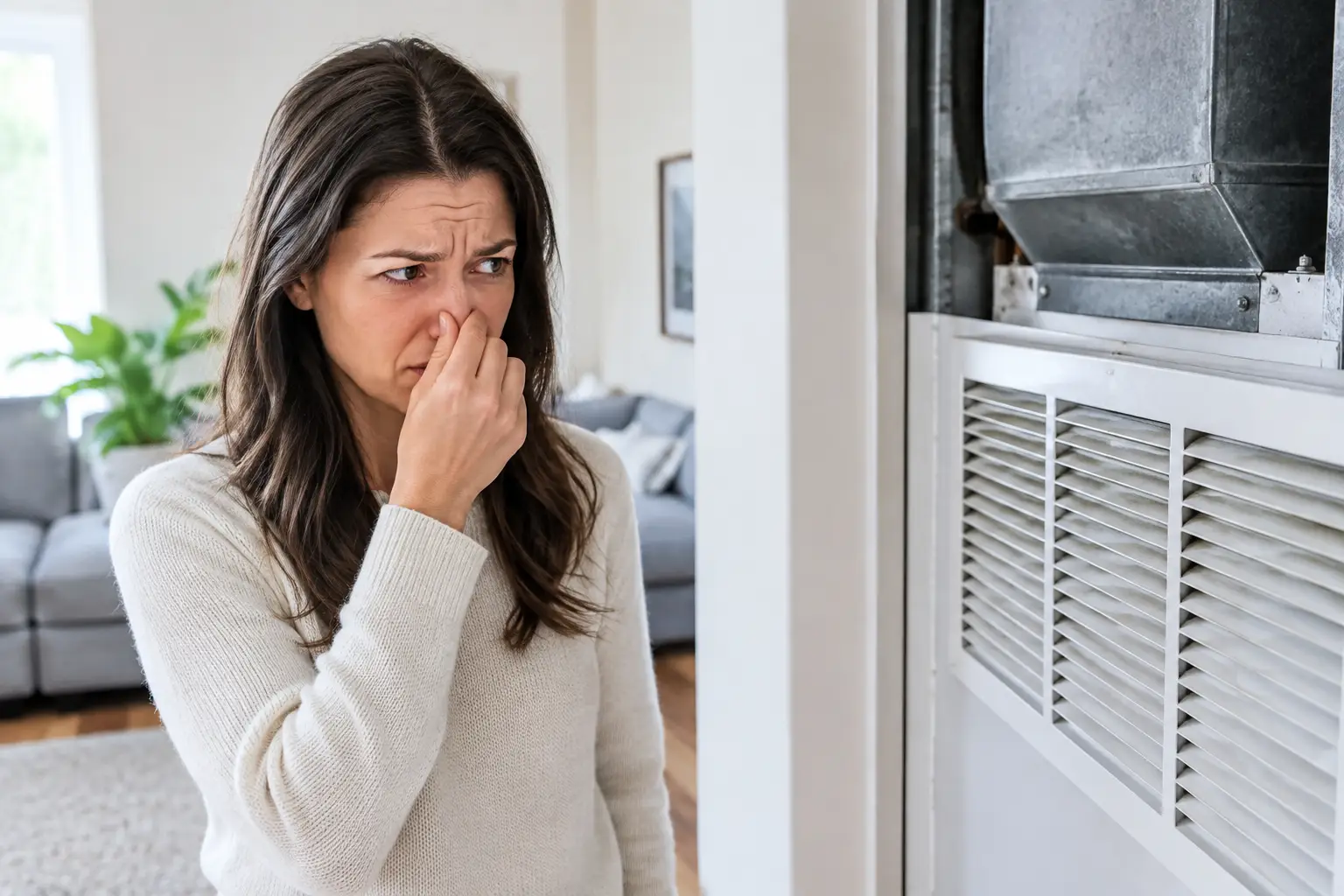
That damp-basement odor that appears every time the air kicks on is more than an annoyance. A musty HVAC smell can mean moisture is lingering somewhere it should not be – inside the equipment, in the drain system, or occasionally in the ductwork. For Central Kentucky homeowners, where muggy summers can put serious strain on an air conditioner, catching the cause early can protect both your comfort and your indoor air quality.
The good news is that a musty smell does not automatically mean your home has a major mold problem. Sometimes the fix is as simple as a dirty filter or a clogged condensate drain. Other times, the system needs professional cleaning, repair, or humidity control to stop the odor from coming back.
Why Does My HVAC Have a Musty Smell?
Your air conditioner removes humidity as it cools your home. That moisture collects on the indoor evaporator coil and drips into a condensate pan before leaving through a drain line. When that process works correctly, the water moves out of the system quickly. When it does not, damp dust, debris, and microbial growth can create the familiar musty odor.
A heat pump works the same way in cooling mode. Even a furnace can produce a musty odor when the blower starts if moisture or organic buildup is sitting near the indoor coil, drain pan, air filter, or duct system.
The timing of the smell offers a useful clue. If you notice it only during the first few minutes of cooling, moisture on the coil or in the drain pan is a likely suspect. If the odor continues throughout the cycle or seems stronger in one room, the issue may be in the ducts, a supply register, or that area of the home.
A Dirty Filter Can Hold Moisture and Odors
An overloaded air filter restricts airflow, allowing more dust to settle around the evaporator coil. It can also trap moisture and odors of its own. In severe cases, poor airflow can contribute to a coil that gets too cold and freezes, creating more water as it thaws.
Check the filter first, especially if it has been more than one to three months since the last change. Homes with pets, construction dust, allergies, or several occupants may need more frequent changes. Use the filter size and MERV rating recommended for your system. A filter that is too restrictive can create a different airflow problem.
A Clogged Condensate Drain Is a Common Cause
The drain line carries water away from the indoor unit. Algae, slime, dust, and mineral buildup can partially or fully block it. Water may then sit in the pan, overflow near the equipment, or trigger a safety switch that shuts off the air conditioner.
A musty odor combined with water around the furnace, air handler, or utility closet deserves prompt attention. Do not keep resetting the system if it shuts down. The safety switch may be preventing water damage, and the drain issue still needs to be corrected.
Mold or Mildew Can Grow on the Indoor Coil
The evaporator coil stays cold and wet while your AC runs. Dust buildup on that coil gives moisture something to cling to, creating conditions where mildew and microbial growth can develop. The odor may smell earthy, sour, or like wet towels.
This is not a good spot for a homeowner to scrub. Coils have delicate fins that bend easily, and harsh cleaners can damage components or affect air quality. A trained technician can access the coil safely, clean it correctly, inspect the drain pan, and make sure the system is draining as designed.
Humidity Problems Can Make the Odor Return
Kentucky humidity can work against an otherwise functional HVAC system. If indoor humidity stays high, surfaces throughout the home can remain damp long enough for odors to develop. Oversized air conditioners are one possible cause because they cool the house quickly but may not run long enough to remove adequate moisture.
Humidity can also rise when ducts leak, bathroom exhaust fans are not used, crawl spaces are damp, or the AC needs service. The right answer depends on the home. Some households benefit from an HVAC repair or adjustment, while others need targeted duct sealing or a whole-home dehumidifier.
What to Do When You Notice a Musty HVAC Smell
Start with a quick, safe check before the smell gets worse. Turn the thermostat off if you see active leaking, standing water, ice on refrigerant lines, or any signs of electrical trouble. Then look at the accessible areas around the indoor unit.
Check these four things:
- Replace a dirty or damp air filter with the correct size and type.
- Look for water around the air handler, furnace, drain pan, or nearby floor.
- Make sure supply and return vents are open and not blocked by furniture or rugs.
- Notice whether the odor affects the whole house, one zone, or one particular room.
Avoid spraying fragrance, disinfectant, or bleach into vents. Fragrances only cover the odor, and household chemicals can be unsafe for HVAC components and the people breathing the air. It is also wise not to pour random drain cleaners into a condensate line. Some products can damage the line or create a bigger cleanup problem.
If you are comfortable doing so, you can gently clean dust from return grilles and vacuum around accessible vents. But an odor that persists after a filter change is usually a sign that the source is farther inside the system or that a moisture issue has not been solved.
When a Musty HVAC Smell Needs Professional Service
Call for HVAC service if the odor lasts more than a day or two, returns every time the AC runs, or comes with weak airflow, unusual noises, water leaks, or poor cooling. Those symptoms can point to a blocked drain, dirty coil, frozen evaporator coil, blower problem, or duct issue that deserves a proper inspection.
You should also schedule service sooner if anyone in the home is sensitive to poor air quality. Young children, older adults, people with asthma, and family members with allergies may be more bothered by damp, stale air. While a smell alone cannot identify what is in the air, it is a practical reason to get the system checked rather than simply living with it.
A professional visit should focus on finding the moisture source, not merely masking the smell. Depending on what the technician finds, the solution may include cleaning the evaporator coil, clearing the condensate line, repairing a drain component, cleaning affected ducts, improving filtration, or addressing whole-home humidity. UV lights can be useful in certain systems, particularly near the coil, but they work best as part of a complete indoor air quality plan rather than as a shortcut around a drainage or humidity problem.
Can Ductwork Cause a Musty Odor?
Yes, although ducts are not always the culprit. Ducts can collect dust and odors over time, especially if there has been water damage, pest activity, a dirty filter, or a long period of high indoor humidity. Flexible ductwork in a damp crawl space or attic can be especially vulnerable if it is poorly insulated or has leaks.
Duct cleaning can help when there is confirmed buildup or contamination, but it should not be the automatic answer to every odor. If the coil is dirty or the drain line is clogged, cleaning the ducts without fixing that source may only provide temporary relief. A good inspection identifies where the smell begins and recommends only the work that makes sense for your home.
Preventing Musty HVAC Odors Through Every Season
The simplest prevention is regular maintenance before summer humidity arrives. During a tune-up, a technician can inspect the coil, drain pan, condensate line, blower components, electrical connections, and overall cooling performance. This gives small drainage and airflow problems less time to turn into odors, leaks, or an AC breakdown during a heat wave.
At home, keep up with filter changes, leave interior doors open enough for proper return airflow, and use bathroom and kitchen exhaust fans to remove moisture at the source. If your home feels clammy even when it is cool, do not ignore it. That sticky feeling is often your first sign that the air conditioner is not managing humidity the way it should.
For homeowners in Elizabethtown, Greensburg, Shepherdsville, Campbellsville, Radcliff, Mount Washington, Glasgow, Fort Knox, and nearby communities, Instant Aire can inspect the system, locate the moisture problem, and help bring clean, comfortable air back to the rooms your family uses every day. A fresh-smelling home starts with solving the cause, so you can turn the system on and simply enjoy the comfort.