
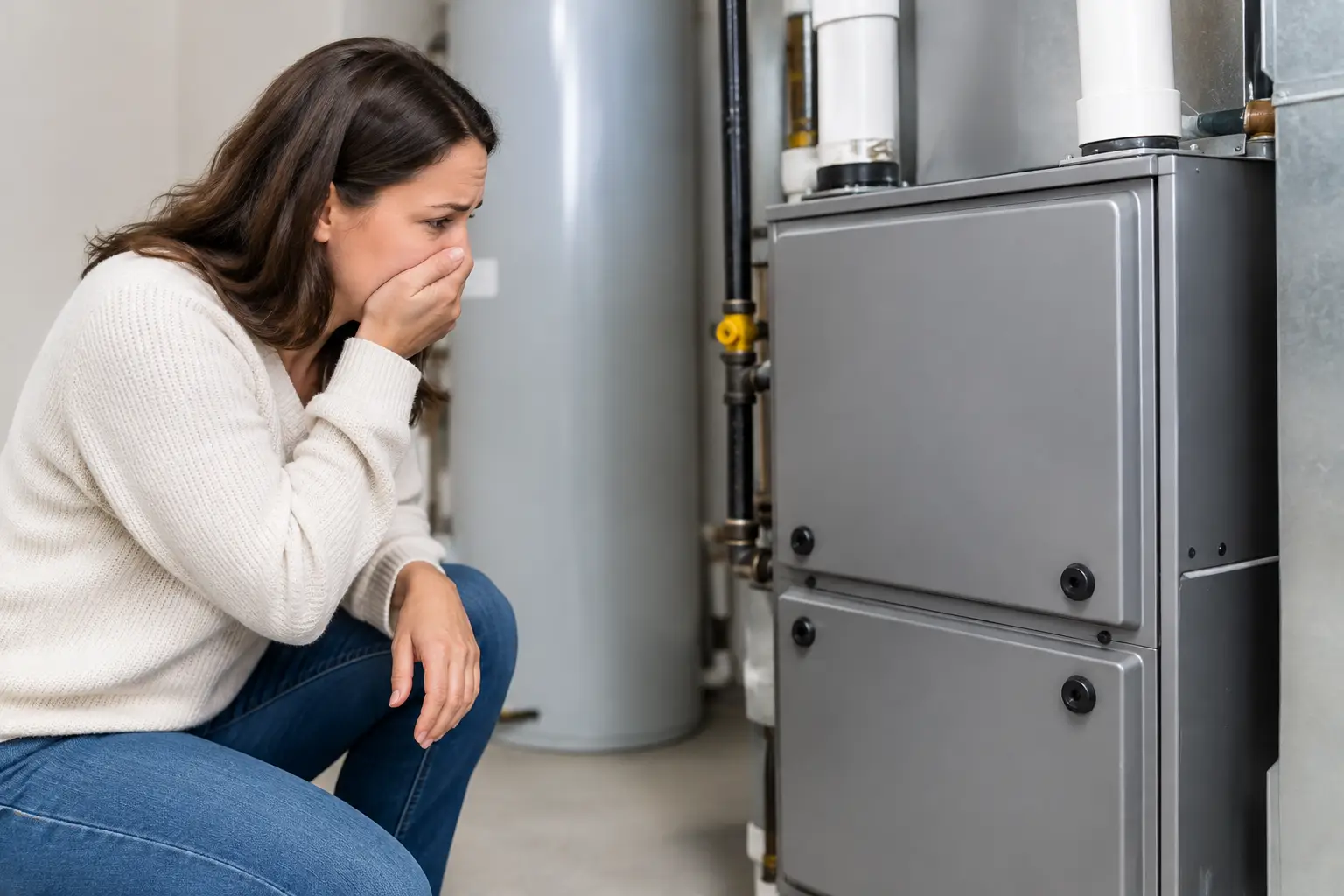
The signs of carbon monoxide from furnace failures are not always dramatic. Your home may still feel warm. The furnace may still turn on. But an unseen combustion problem can put your family at risk, which is why a carbon monoxide alarm should never be treated like a low-battery nuisance or a false alarm.
Carbon monoxide, often called CO, is a colorless, odorless gas created when fuel does not burn completely. A properly operating gas furnace vents combustion gases safely outside. When a furnace has a cracked heat exchanger, blocked vent, burner issue, or damaged flue pipe, CO can potentially enter the living space instead.
If you suspect carbon monoxide in your home, act first and investigate later. Get everyone, including pets, outside to fresh air, call 911 or your local fire department, and do not reenter until emergency responders say it is safe. Then arrange for a qualified HVAC professional to inspect the furnace before using it again.
1. Your Carbon Monoxide Alarm Goes Off
A working CO alarm is the most reliable warning sign for homeowners. If it sounds, assume there is a real danger. Do not open a few windows, silence the alarm, and go back to bed. Fresh air can reduce immediate exposure, but it does not identify or fix the source.
Leave the home right away and call for emergency help from outside. Even if the furnace seems like the likely source, CO can also come from a gas water heater, fireplace, attached garage, stove, generator, or other fuel-burning appliance. Emergency responders can assess the immediate hazard, and an HVAC technician can determine whether the furnace is safe to run.
2. People in the Home Feel Sick for No Clear Reason
Early carbon monoxide symptoms can look a lot like the flu, a cold, food poisoning, or simple fatigue. Headache, dizziness, nausea, weakness, confusion, chest pain, and shortness of breath are all possible symptoms. Symptoms may become worse the longer someone remains inside and improve after they step outdoors.
That pattern matters. If several people in the household feel sick at the same time, or if symptoms appear mainly when the heat is running, treat it as a potential CO emergency. Do not wait to see whether everyone feels better in the morning.
Young children, older adults, pregnant people, and anyone with heart or breathing conditions can be especially vulnerable. Pets may also become unusually tired, unsteady, or ill. A headache alone does not prove carbon monoxide exposure, but it is never worth guessing when a fuel-burning appliance is involved.
3. The Furnace Has a Yellow or Flickering Flame
A gas furnace burner flame should generally be steady and mostly blue. A yellow, orange, or flickering flame can indicate incomplete combustion, which may produce carbon monoxide. It can also point to dirty burners, poor airflow, or another issue requiring professional service.
Do not confuse the furnace burner with a small pilot flame if your system has one. And do not try to adjust gas components yourself. A visual check can help you spot a concern, but safe diagnosis requires proper combustion testing and an inspection of the venting system.
4. You See Soot, Rust, or Moisture Around the Furnace
Black or brown soot around the furnace cabinet, burners, vent pipe, or nearby walls can be a warning that combustion is not happening cleanly. Excessive rust, corrosion, or white staining around the flue can also suggest moisture or venting problems.
Pay attention to moisture on nearby windows, walls, or cold surfaces, especially when the furnace runs. Condensation by itself does not automatically mean carbon monoxide is present. Kentucky homes can develop indoor humidity issues for several reasons. But when moisture appears alongside soot, burner changes, strange odors, or a malfunctioning furnace, it deserves fast attention.
5. The Furnace Smells Unusual or Runs Differently
Carbon monoxide has no smell, so you cannot rely on your nose to detect it. Still, a furnace problem that could lead to unsafe combustion may create other noticeable changes. You might smell burning dust beyond the normal start-of-season odor, exhaust-like fumes, or a musty smell near the equipment.
You may also notice the furnace cycling on and off more often, struggling to heat the house, making booming or rumbling sounds at startup, or shutting down unexpectedly. These symptoms do not always mean CO is leaking. They do mean the system needs a professional inspection before a minor repair turns into a no-heat call or a safety concern.
6. The Vent Pipe or Chimney Appears Damaged or Blocked
Your furnace needs a clear, intact path to move combustion gases outdoors. A loose, corroded, disconnected, crushed, or damaged vent pipe can let dangerous gases spill into the home. Birds’ nests, leaves, ice, snow, or other debris can block some exterior terminations as well.
Never tape, patch, or reconnect a furnace vent yourself. Venting requirements depend on the furnace type, fuel source, installation location, and local code. A small-looking gap or slope issue can have a major effect on how exhaust moves through the system.
If you have recently had roof work, renovations, storm damage, or work done near the furnace, take a quick look for anything visibly out of place. Then have a trained technician verify that the entire venting route is secure and operating correctly.
7. Your Furnace Is Old or Has Missed Maintenance
Age alone does not make a furnace dangerous. Many well-maintained systems provide safe, dependable heat for years. But older furnaces can be more likely to develop corrosion, burner wear, venting issues, or heat exchanger problems, particularly when they have gone several seasons without professional maintenance.
A cracked heat exchanger is one concern homeowners often hear about. The heat exchanger separates combustion gases from the air that circulates through your home. Not every crack causes carbon monoxide to enter the air supply, and not every furnace repair requires replacement. It depends on the location and severity of the damage, the furnace’s condition, and whether the equipment can be safely repaired.
That is why an accurate inspection matters. A trustworthy technician should explain what was found, perform appropriate safety checks, and help you understand the repair or replacement options without pressure.
What to Do When You Suspect Carbon Monoxide
The right response is simple: prioritize people over property. If a CO alarm sounds or anyone has symptoms that could indicate exposure, get outside immediately, call 911 or the fire department, and seek medical guidance if anyone feels ill. Do not drive yourself if you are dizzy, confused, weak, or short of breath.
Do not turn the furnace back on to “see if it happens again.” Do not run fans to clear the air and assume the problem is over. Once emergency responders have cleared the home, schedule an HVAC inspection before operating the suspected appliance.
For Central Kentucky and Kentuckiana homeowners, Instant Aire Heating & Cooling can help inspect furnace performance, combustion safety, and venting concerns so you can get back to a home that feels warm, clean, and secure.
Preventing Furnace-Related CO Problems
The best protection combines functioning alarms with professional furnace care. Install carbon monoxide alarms on every level of the home and near sleeping areas, following the manufacturer’s placement instructions. Test them monthly, replace batteries as directed, and replace the unit when it reaches the end of its service life.
Schedule furnace maintenance before heavy heating season whenever possible. During a thorough visit, a technician can inspect burners, electrical connections, filters, airflow, venting, safety controls, and overall operation. Maintenance cannot prevent every unexpected failure, but it gives developing issues a much better chance of being found before a cold night turns urgent.
Keep the area around the furnace clear, avoid storing paint, gasoline, cleaning chemicals, or clutter nearby, and make sure return-air vents are not blocked. If your furnace has been acting differently, trust that instinct. A quick professional check is a small step toward keeping your family toasty and snug, with safe heat behind every warm room.