
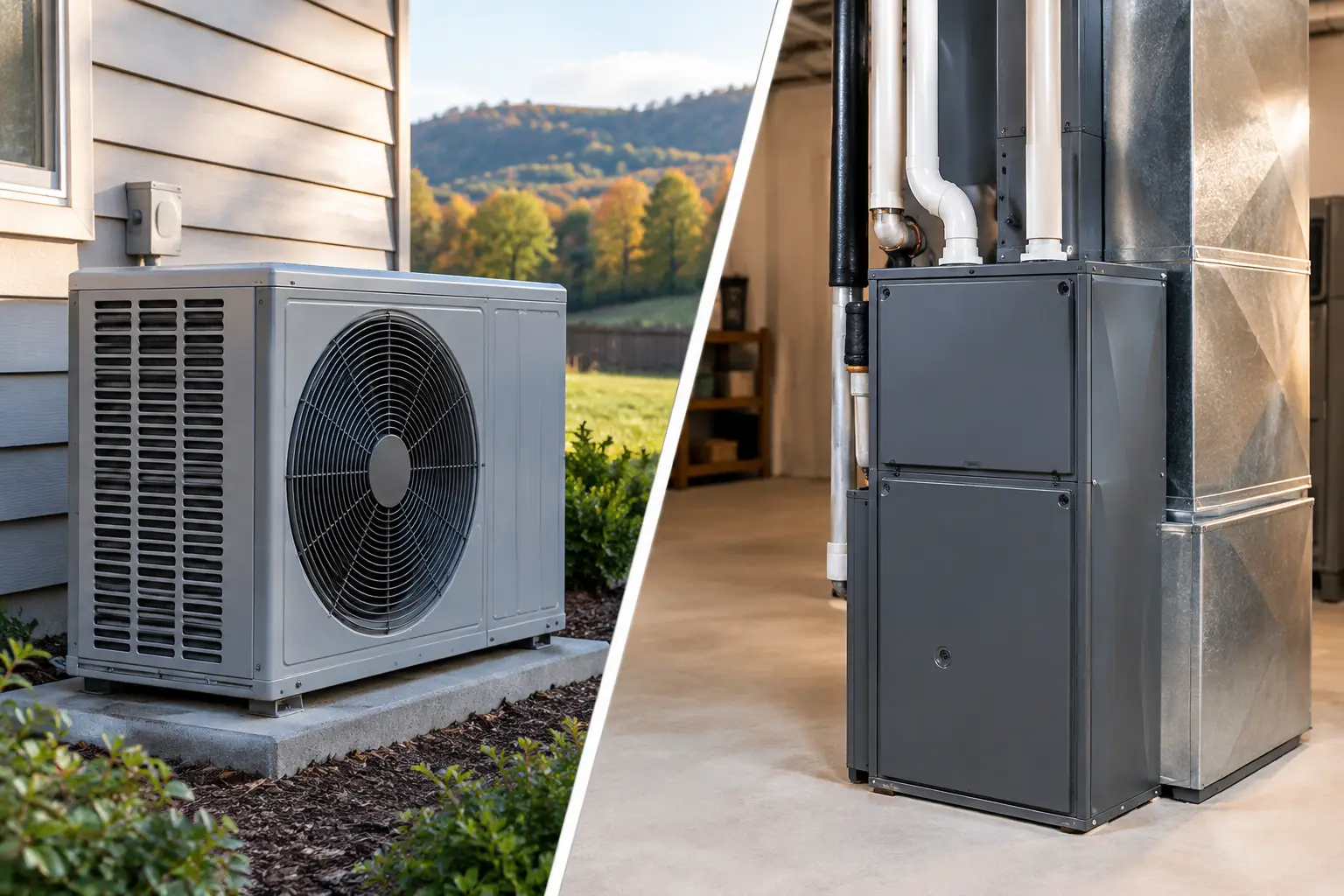
A heating system can look efficient on a product label and still be the wrong fit for your home. When comparing heat pump vs furnace efficiency, Central Kentucky homeowners need to consider more than a single percentage or rating. Our winters can bring mild afternoons, damp chilly mornings, and cold snaps that put any heating system to work.
The better choice depends on your home, utility costs, insulation, existing equipment, and how you want to handle the coldest days of the year. A properly sized, professionally installed system matters just as much as the equipment type. Here is how heat pumps and furnaces stack up when comfort, operating costs, and dependable winter performance are all on the line.
How Furnace Efficiency Is Measured
Gas furnace efficiency is measured by Annual Fuel Utilization Efficiency, or AFUE. This number tells you how much of the fuel your furnace converts into usable heat over a typical heating season.
A furnace with an 80% AFUE rating turns roughly 80 cents of every fuel dollar into heat for your home. The remaining 20 cents is lost through exhaust gases and the normal operation of the equipment. High-efficiency furnaces commonly reach 90% to 98% AFUE, meaning they waste far less fuel.
That is straightforward, dependable efficiency. A furnace creates heat by burning natural gas, propane, or oil, then sends that heat through your ductwork. Even when temperatures in Elizabethtown, Radcliff, or Glasgow fall well below freezing, a correctly operating furnace can continue producing strong indoor heat.
Where High-Efficiency Furnaces Shine
For homes with access to affordable natural gas, a high-efficiency furnace can be an excellent long-term option. It provides fast, powerful heat and is especially reassuring for households that prefer a traditional heating source during freezing weather.
Modern high-efficiency models use sealed combustion and vent exhaust through PVC piping rather than a conventional chimney. They may cost more upfront than a standard-efficiency model, but lower fuel waste can help offset that investment over time. The actual savings depend on your fuel rate, your old system’s condition, and how much heat your home needs.
A furnace is also often paired with a central air conditioner. That setup keeps heating and cooling equipment separate, which some homeowners prefer. The trade-off is that you have two primary systems to maintain and eventually replace.
How Heat Pump Efficiency Works
A heat pump does not create heat through combustion. It moves heat from outdoors to indoors, even when the air feels cold. That difference is why heat pumps can deliver more heat energy than the electricity they consume.
Instead of AFUE, heat pump heating performance is commonly measured by HSPF2, short for Heating Seasonal Performance Factor 2. Cooling performance is measured by SEER2. Higher numbers generally indicate greater seasonal efficiency, though they do not tell the whole story about comfort in every home.
Heat pumps are often described as being more than 100% efficient. That sounds strange until you understand that they are transferring available heat rather than converting fuel into heat. Under favorable conditions, a heat pump may provide two to three units of heat for every unit of electricity it uses.
Why Mild Kentucky Weather Favors Heat Pumps
Much of the heating season in Kentuckiana is cool rather than severely cold. Those are conditions where a heat pump can operate very efficiently. It provides steady, even warmth without the blasts of hot air many homeowners associate with a furnace.
Because it also works as an air conditioner in summer, a heat pump combines heating and cooling in one outdoor system. For a homeowner replacing both an aging furnace and AC, that can simplify the project and reduce the amount of equipment to service.
A heat pump can also improve comfort by running longer at lower output. Longer cycles can reduce temperature swings between rooms, provided the ductwork, thermostat settings, and system sizing are right.
Heat Pump vs Furnace Efficiency in Cold Weather
The most meaningful part of the heat pump vs furnace efficiency conversation is what happens when temperatures drop. A furnace’s efficiency rating remains relatively consistent because it is generating heat through combustion. A heat pump’s capacity and efficiency gradually decline as outdoor temperatures fall because there is less available heat to move indoors.
That does not mean heat pumps stop working in Kentucky winters. Today’s cold-climate heat pumps perform far better in low temperatures than older equipment. Still, every heat pump has a point where it may need supplemental heat to keep up with the home’s heat loss.
Supplemental heat may come from electric heat strips or a gas furnace. Electric heat strips can provide dependable backup, but they are more expensive to run than the heat pump itself. That is why a system designed for your specific home and local weather matters more than choosing based on one efficiency rating alone.
A poorly sized heat pump can run constantly, struggle during a cold snap, and drive up electric bills. A properly selected unit, on the other hand, can carry a large portion of the heating season efficiently while giving your family consistent comfort.
The Dual-Fuel Option: A Practical Middle Ground
For many Kentucky homeowners, a dual-fuel system offers a smart balance. This setup pairs an electric heat pump with a gas furnace. The heat pump handles heating during mild and moderately cold weather, while the furnace takes over when temperatures reach a set point where gas heat makes more financial or practical sense.
This arrangement lets homeowners use the heat pump when it is at its most efficient and rely on furnace heat when winter gets serious. It also gives you powerful backup heat without depending solely on electric heat strips.
Dual fuel is not automatically the best choice for every home. It involves a larger initial investment, and savings depend heavily on local electricity and gas prices. But for families who want high seasonal efficiency without giving up strong cold-weather heating, it deserves a close look.
Efficiency Ratings Do Not Tell the Whole Story
Two homes can install the same high-efficiency equipment and see very different utility bills. The difference often comes down to the house itself.
Leaky ductwork can lose conditioned air into an attic, crawl space, or basement before it reaches the rooms where your family needs it. Inadequate attic insulation, drafty doors, aging windows, oversized equipment, and neglected filters can all reduce real-world efficiency. Indoor humidity matters, too. Air that is too dry can make a home feel colder, leading people to turn up the thermostat even when the system is working as intended.
Maintenance plays a major role as well. A dirty outdoor coil, restricted filter, worn blower component, or refrigerant issue can make a heat pump work harder. A furnace with dirty burners, airflow problems, or combustion concerns may lose performance and become less dependable. Annual professional maintenance helps catch those issues before the coldest night of the year exposes them.
Which System Is Right for Your Home?
A heat pump may be the better fit if you want one system for both heating and cooling, have manageable winter heating needs, or are replacing an electric furnace, baseboard heat, or an aging heat pump. It can be especially appealing when you value lower energy use through much of the year.
A high-efficiency gas furnace may be the stronger choice if your home already has natural gas, you want rapid high-temperature heat, or you live in a draftier older home with high heat loss. It can also make sense when your existing AC is still in good condition and you only need to replace the heating side.
If you are weighing both options, do not settle for a quick equipment swap based on the size of your old system. Ask for a home-specific load calculation, a review of your ductwork, and a clear explanation of operating costs. The right recommendation should account for your family’s comfort preferences, not just the square footage on a listing sheet.
Comfort Is the Efficiency That Matters Every Day
The most efficient system is the one that keeps your home comfortably warm without wasting energy, struggling through cold weather, or surprising you with preventable repair bills. Whether that is a heat pump, a high-efficiency furnace, or a dual-fuel setup depends on the details of your home.
If your current system is noisy, uneven, expensive to run, or unreliable, a trusted local HVAC professional can help you compare the real options before a breakdown forces a rushed decision. Instant Aire can evaluate your equipment, airflow, and comfort needs so your family can stay toasty and snug when Kentucky weather changes its mind.