
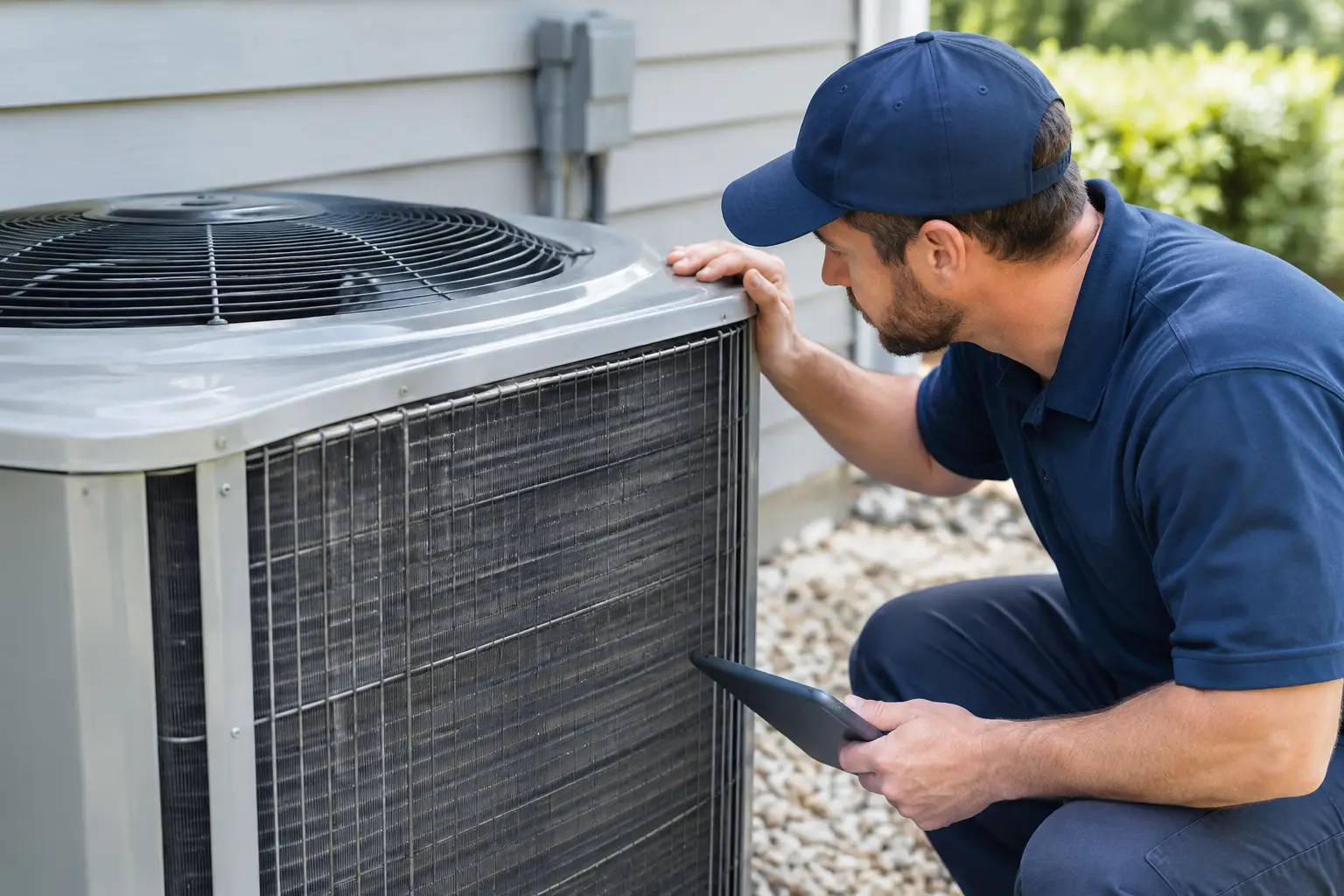
Your thermostat is set to 72, the indoor fan is running, and yet the house keeps getting warmer. When that happens, AC condenser problems are often near the top of the list. The condenser is the outdoor portion of your air conditioner, and when it cannot release heat properly, your whole system has to work harder for less comfort.
For homeowners across Central Kentucky and Kentuckiana, a struggling condenser can turn a hot afternoon into a stressful repair call fast. Some issues are simple enough to spot safely. Others involve high voltage, pressurized refrigerant, or failing components that need a trained HVAC technician. Knowing the difference can help you protect your comfort, your budget, and your equipment.
What Your AC Condenser Actually Does
Your outdoor condenser works with the indoor evaporator coil to move heat out of your home. Refrigerant absorbs heat indoors, carries it outside, and releases that heat through the condenser coil. A fan pulls outdoor air across the coil while the compressor keeps refrigerant moving through the system.
That means the condenser is not supposed to feel cool. It is supposed to be warm and to blow warm air away from the unit. The concern starts when it is excessively hot, unusually loud, not running at all, or running constantly while the home never reaches the temperature you set.
Common AC Condenser Problems Homeowners Notice
A condenser problem does not always mean the entire air conditioner needs replacement. A clogged coil, worn capacitor, damaged fan motor, electrical failure, refrigerant leak, or compressor issue can produce similar comfort complaints. The cause matters because repair options, urgency, and cost can vary widely.
The unit hums but the fan will not spin
A humming outdoor unit with a still fan is a common sign of a failed capacitor or fan motor. The capacitor gives the motor the electrical boost it needs to start. If it fails, the unit may hum, struggle, or shut itself down.
Turn the system off at the thermostat if the fan is not operating. Do not try to spin the blade with a stick or your hand. A condenser contains electrical components that can hold a charge, and continuing to run it can overheat the compressor.
The condenser runs, but your house is not cooling
If the outdoor unit is running but indoor air feels warm or only mildly cool, the issue may be low refrigerant, a dirty condenser coil, a frozen indoor coil, a compressor problem, or restricted airflow inside the home. A dirty filter can contribute, so check that first.
If the filter is clean and the system still cannot keep up, schedule service rather than lowering the thermostat further. Setting the thermostat far below the outdoor temperature does not make the air conditioner cool faster. It only encourages longer run times and puts more strain on equipment that may already be struggling.
The condenser is making new or loud noises
Your system will make some normal operating sounds, including a steady fan and a brief click when it starts. Grinding, screeching, loud buzzing, rattling, or repeated clicking are different. They can point to loose hardware, a failing motor, a contactor problem, debris in the unit, or compressor trouble.
A loud metallic rattle may be as simple as a loose panel. But a persistent electrical buzz or grinding sound deserves prompt attention. Catching a minor part failure early can sometimes prevent damage to more expensive components.
The breaker trips or the unit will not start
A tripped breaker is your home’s electrical system trying to prevent a hazard. You can reset it once after checking that the thermostat is off, but do not keep resetting a breaker that trips again. Repeated trips can signal a shorted wire, failing compressor, damaged capacitor, or another electrical issue.
If you smell burning, see damaged wiring, or hear a strong electrical buzz, leave the unit off and call for help. This is not a wait-and-see situation during a Kentucky heat wave.
The coil is dirty or blocked
Grass clippings, cottonwood, leaves, mulch, and dust can collect on the condenser coil and restrict heat transfer. The system then runs hotter and longer, which can raise energy use and wear down parts faster.
You can safely clear leaves and loose debris from around the cabinet with the power off. Keep plants trimmed back so the unit has open breathing room on all sides. Do not use a pressure washer, push objects through the coil fins, or spray electrical compartments. Bent fins and water damage can create a larger repair than the one you started with.
Safe Checks Before You Schedule AC Condenser Repair
A few homeowner checks can rule out simple problems without putting you at risk. First, confirm the thermostat is set to cooling and below the current indoor temperature. Replace a clogged air filter if needed, make sure supply vents are open, and check whether the outdoor disconnect or breaker has been switched off.
Next, look at the condenser from a safe distance. Clear away leaves, toys, and overgrown vegetation. Check for ice on refrigerant lines, water around the unit, or obvious damage after a storm. If you see ice, turn the cooling system off and set the fan to ON if your thermostat allows it. The system needs to thaw before a technician can properly diagnose why it froze.
Avoid removing the condenser panel, touching wiring, adding refrigerant, or attempting a compressor repair. Refrigerant handling requires proper equipment and training, and guessing at the charge can damage the system instead of fixing it.
When Repair Makes Sense and When Replacement May Be Smarter
Most condenser issues are repairable, especially when the equipment is relatively young and the rest of the system is in good condition. A capacitor, contactor, fan motor, electrical repair, or coil cleaning can restore cooling without replacing the entire air conditioner.
Replacement becomes a more serious conversation when the compressor fails, the coil has a significant leak, the unit uses an outdated refrigerant, or repair costs keep stacking up on an older system. Age alone does not make replacement mandatory. A well-maintained unit may have useful life left, while a neglected one may be costly to keep running.
The best decision depends on repair cost, system age, efficiency, warranty coverage, and how reliably the unit has cooled your home. If your AC has needed multiple repairs in recent seasons, ask for clear repair and replacement options. You deserve to know the immediate cost as well as what each choice may mean for future comfort and energy bills.
Preventing Future AC Condenser Problems
Your condenser works hardest when the weather is hottest, so maintenance before summer is the practical way to reduce surprise breakdowns. A professional tune-up checks electrical connections, motor performance, refrigerant operation, coil condition, drainage, and the overall cooling cycle. It also gives small worn parts a chance to be replaced before they fail on the hottest day of the year.
Between visits, change filters regularly, keep the outdoor area clear, and pay attention to changes in cooling performance or sound. Do not hide the condenser behind dense shrubs or decorative fencing. It may look tidier, but restricted airflow can make the unit run hotter.
Families in Elizabethtown, Shepherdsville, Greensburg, Radcliff, Fort Knox, and surrounding communities should not have to wait through a muggy night hoping the system comes back on. Instant Aire can diagnose condenser trouble, explain the repair clearly, and work to restore dependable home comfort as quickly as possible. If your outdoor unit is acting differently, turning it off before a small issue becomes a major one is often the smartest next step.