
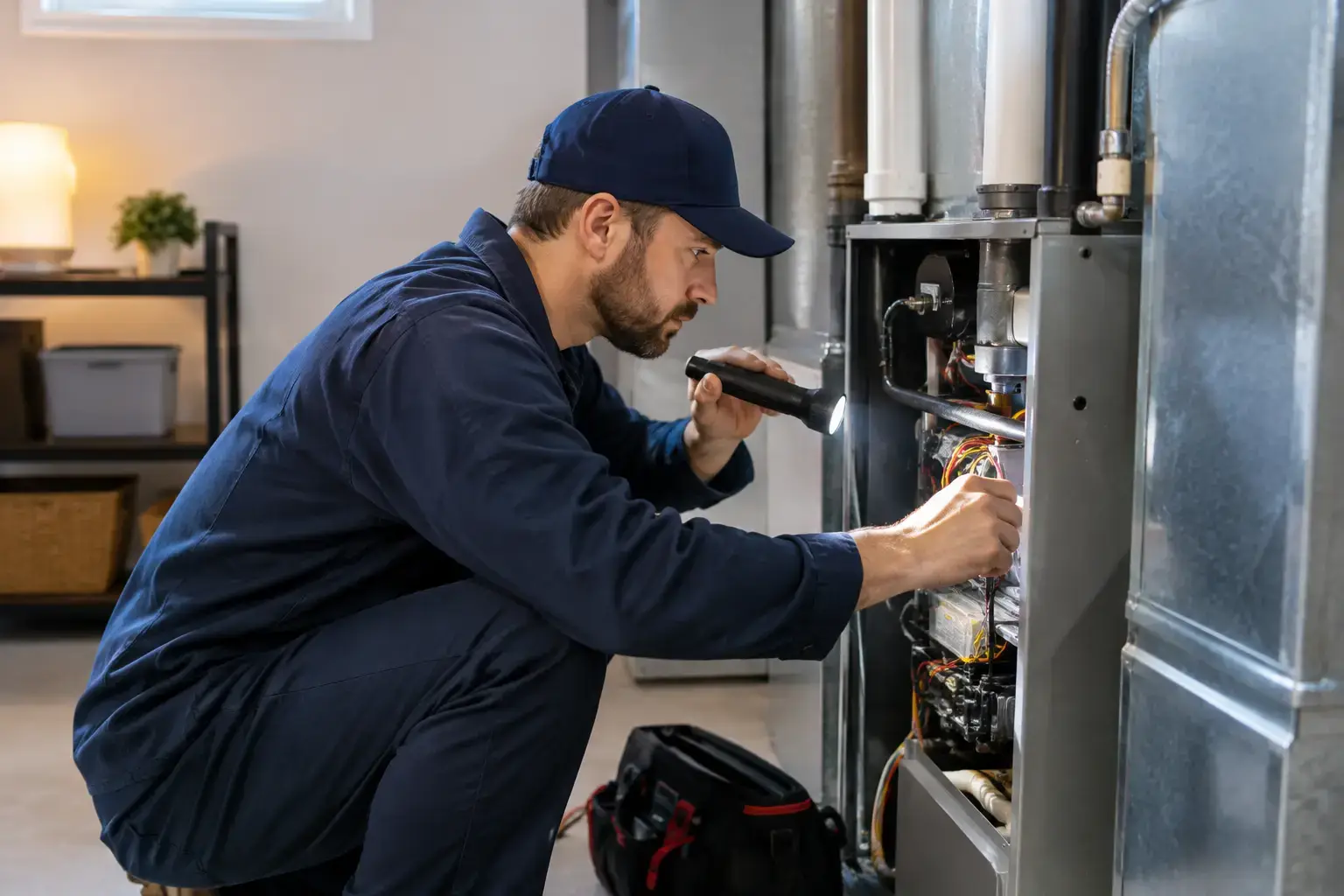
A furnace failure at 10 p.m. is not a problem most families can put off until morning. When the house is getting colder, kids are under extra blankets, or an older family member is uncomfortable, you need clear answers and dependable after hours furnace help. The goal is simple: protect your household, prevent further damage, and get the heat back on as quickly as possible.
Start With Safety, Not the Thermostat
Before trying to restart anything, pay attention to what your furnace is telling you. A sudden loss of heat is frustrating. A gas smell, smoke, sparks, or a carbon monoxide alarm is a safety issue.
If you smell natural gas, hear a strong hissing sound near a gas line, see smoke, or suspect a carbon monoxide problem, leave the home right away. Take people and pets with you, call 911 or your gas utility from outside, and do not flip electrical switches, light a flame, or try to diagnose the furnace yourself. Carbon monoxide has no color or odor, which is why working carbon monoxide detectors matter in every home with fuel-burning equipment.
If there are no immediate danger signs, lower the stress level and start with a few safe checks. A furnace that will not run does not always mean the equipment has failed completely. Sometimes the issue is a thermostat setting, a tripped breaker, or an airflow restriction that shut the system down to protect itself.
Quick Checks That May Restore Heat
Set the thermostat to Heat and raise it at least three to five degrees above the room temperature. Make sure the fan setting is on Auto rather than On. If the thermostat screen is blank, replace the batteries if your model uses them. A dead thermostat battery can look a lot like a furnace failure.
Next, check your electrical panel for a tripped furnace breaker. Turn it fully off, then back on once. Also look for the furnace power switch, often mounted on a wall near the unit. It can resemble a regular light switch and is easy to bump off accidentally.
Check the air filter if it is safe and accessible. A severely clogged filter can restrict airflow and cause the furnace to overheat and shut down. Replace it with the correct size if you have one available. Do not run a furnace without a filter, and do not use a filter that is too restrictive for your system.
Finally, look at the furnace access panel. If it is not seated correctly, the safety switch may prevent the unit from operating. Secure the panel, then give the system a few minutes to respond. Furnaces often have a built-in delay before the blower starts.
These steps are worth trying once. Repeatedly resetting breakers, cycling power, or pressing the furnace reset button again and again can damage components or hide a more serious problem. If the heat does not return, it is time to call for professional help.
When After Hours Furnace Help Cannot Wait
Some heating problems are more urgent than others. A home that stays reasonably warm for a few hours may allow you to schedule first thing in the morning. But an emergency call is the smart choice when your family, your home, or your plumbing could be at risk.
Call for after hours furnace help when temperatures are dropping quickly indoors, especially during freezing Central Kentucky weather. Do not wait if anyone in the household is an infant, senior, has a medical condition, or is especially vulnerable to the cold. A complete loss of heat can also put pipes at risk of freezing, particularly in crawl spaces, exterior walls, basements, and unheated areas.
You should also call right away if the furnace is making banging, screeching, grinding, or booming noises; if it starts and stops repeatedly; if it blows cold air; or if you see water pooling around the equipment. High-efficiency furnaces create condensation, and a blocked drain line can shut the system down. Water near electrical equipment still needs prompt attention.
A technician can safely identify whether the problem is a failed igniter, flame sensor, blower motor, pressure switch, control board, gas supply issue, condensate backup, or another component. The symptoms may sound similar from the living room, but the repair should be based on a proper diagnosis, not a guess.
Keep Your Family Comfortable While You Wait
Once service is on the way, focus on holding onto the heat you have. Close blinds and curtains, keep exterior doors shut, and gather the family in one or two rooms instead of trying to warm the whole house. Layer clothing, use extra blankets, and close doors to unused rooms.
A fireplace can help if it is properly vented and safe to operate. Electric space heaters may also provide short-term relief, but only when used carefully. Plug them directly into a wall outlet, place them on a level surface, and keep them at least three feet from bedding, furniture, curtains, pets, and children. Never use an oven, grill, kerosene heater, or gas range to heat your home. Those shortcuts create serious fire and carbon monoxide risks.
To help prevent frozen pipes, open cabinet doors below sinks on exterior walls so warm indoor air can circulate. Let faucets run at a very small trickle if freezing temperatures are expected. If your home becomes too cold to occupy safely, it may be best to stay with family or friends while the repair is completed.
What to Tell the HVAC Technician
A little information helps speed up the visit. When you call, be ready to explain whether the furnace is completely off, running without heat, cycling on and off, making unusual sounds, or showing an error code. If you have checked the filter, thermostat, breaker, and furnace switch, mention that too.
It also helps to share the furnace make, approximate age, fuel type, and where it is located. Clear a path to the equipment if you can do so safely, and move stored items away from the furnace area. That gives the technician room to inspect the system and start working without delay.
For homeowners in Central Kentucky and Kentuckiana, Instant Aire Heating & Cooling provides 24/7 phone availability for urgent heating concerns. The right response is not just arriving quickly. It is finding the real cause, explaining the repair clearly, and completing the work correctly so your home can get back to feeling toasty and snug.
Repair Tonight or Plan a Replacement?
A late-night breakdown does not automatically mean you need a new furnace. Many no-heat calls come down to a repairable part, and a well-maintained system may have years of dependable service left. If the repair is straightforward and the furnace is otherwise in good condition, fixing it is usually the practical choice.
Replacement becomes more worth discussing when the furnace is near or beyond its expected service life, needs frequent repairs, has a cracked heat exchanger, or is costing too much to operate. A technician should walk you through the trade-off honestly. The least expensive repair tonight is not always the best value if it only postpones another failure a few weeks later. On the other hand, replacing a system that has one isolated, affordable issue may not make financial sense.
If replacement is needed, ask about efficiency, proper sizing, warranty coverage, financing, and whether the work can be completed quickly. A properly sized furnace and clean airflow setup can improve comfort in rooms that have always felt chilly, while helping the system run more efficiently.
Prevent the Next Middle-of-the-Night Breakdown
Most furnace emergencies cannot be predicted perfectly, but routine maintenance lowers the odds. Annual service gives a trained technician a chance to inspect safety controls, clean critical components, test operation, check airflow, and catch wear before it turns into a no-heat night.
Homeowners can help by changing filters on schedule, keeping supply and return vents open, and avoiding storage around the furnace. Pay attention to new noises, longer heating cycles, uneven temperatures, and rising utility bills. Those early clues are often your chance to schedule a convenient repair before the first hard cold snap turns a small issue into an after-hours emergency.
When the heat quits, trust your instincts. Keep your family safe, try only the basic checks, and get qualified help when the system needs more than a simple reset. A warm, safe home is worth acting on tonight.