
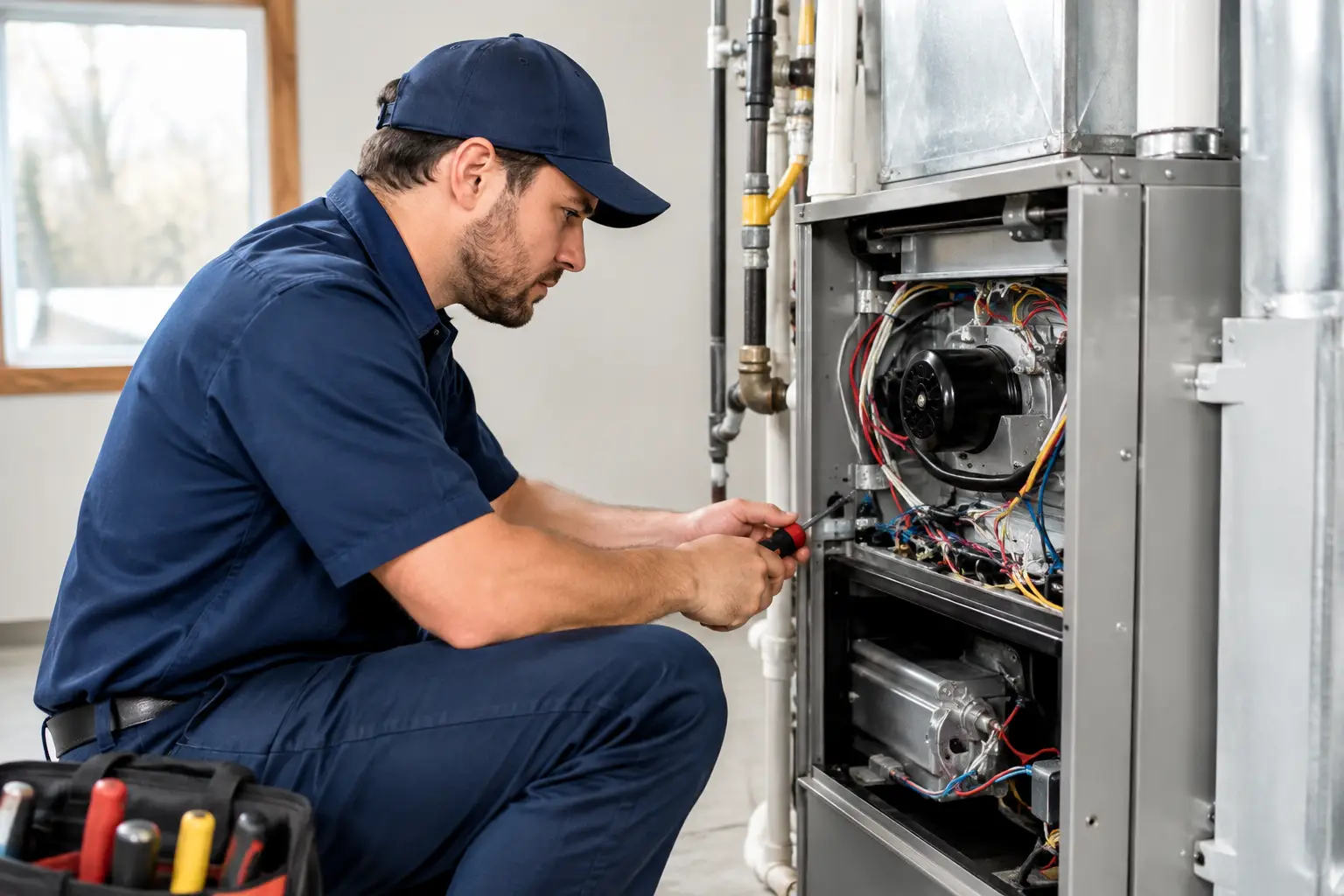
A cold Kentucky morning has a way of making a furnace problem feel urgent fast. If your system is blowing cool air, cycling on and off, or refusing to start, furnace repair cost is probably one of the first things on your mind. The honest answer is that the price depends on the failed part, the furnace’s age, and how quickly the issue is caught.
For many homeowners in Central Kentucky and Kentuckiana, a straightforward repair is far more affordable than replacement. The key is getting a clear diagnosis before a small problem has time to leave your family without dependable heat.
What affects furnace repair cost?
Most furnace repairs begin with a diagnostic visit. A technician checks the thermostat, electrical connections, safety switches, airflow, fuel supply, and the furnace’s ignition sequence to locate the actual cause. That matters because the same symptom, such as a furnace that will not turn on, can come from a simple dirty flame sensor or a more involved control-board problem.
The part that needs repair or replacement is the largest factor in the final price. Labor time also matters. A filter restriction or loose connection can be corrected quickly, while accessing a blower motor, troubleshooting intermittent electrical faults, or replacing a major component takes more time.
Timing can affect the bill, too. A heating failure during a freezing night may require urgent after-hours service. Emergency service is valuable when your home is getting cold, but a fall maintenance visit often catches worn parts before they become a middle-of-winter surprise.
Your furnace’s type, age, and condition all play a role. High-efficiency furnaces have additional components that help save energy, but some repairs can be more specialized. Older systems may have parts that are harder to source, and repeated failures can make replacement a smarter long-term use of your money.
Typical furnace repair costs by problem
Every home and system is different, so these are general installed-price ranges rather than a quote. A local technician should inspect the furnace before giving you a firm repair recommendation.
A basic service call and diagnosis often falls around $75 to $200, depending on the time of day and the issue involved. If the repair is simple, that diagnostic work may lead to a relatively modest total.
A dirty flame sensor is one of the more common reasons a gas furnace starts and then shuts down. Cleaning it is usually on the lower end of repairs. If the sensor needs replacement, homeowners commonly see a total cost in the $100 to $300 range.
An igniter is another frequently replaced part. When it fails, the burners cannot light, leaving the furnace to run without producing heat. Igniter repairs often range from about $150 to $450, depending on the model and access.
Pressure switches, limit switches, and other safety controls can cost roughly $150 to $500 to repair or replace. These components are designed to protect your home and equipment, so bypassing or ignoring a safety-related problem is never a good shortcut.
Blower motor repairs tend to cost more because the motor moves heated air through your home and can require more labor to access and test. Depending on whether the motor, capacitor, module, or assembly is needed, homeowners may pay approximately $300 to $1,200.
A failing control board can create confusing symptoms: random shutdowns, no ignition, a blower that runs constantly, or error codes. Control-board repairs commonly land around $400 to $1,200. Costs vary widely by furnace brand and part availability.
The heat exchanger is one of the most serious furnace repairs. This component separates combustion gases from the air circulating through your home. A cracked heat exchanger may cost $1,500 to $4,000 or more to address, if repair is available and sensible for the system. In many cases, especially with an older furnace, replacement deserves a serious conversation.
Why the cheapest repair is not always the best value
No homeowner wants to pay for more work than necessary. At the same time, a low-price fix is only a good deal if it restores safe, reliable heat. Replacing a failed igniter on an otherwise healthy eight-year-old furnace is very different from putting a major part into a 17-year-old system that has needed multiple repairs in the last two winters.
A good repair recommendation considers more than today’s invoice. It should account for the condition of the heat exchanger, the system’s efficiency, the history of breakdowns, and whether the furnace is properly sized for the home. It should also consider comfort. A furnace that technically runs but leaves bedrooms chilly, creates loud airflow, or struggles to keep up may have a larger issue involving ductwork, airflow, or equipment capacity.
Ask for the cause of the failure, not just the name of the part. You should understand what the technician found, what the repair will do, and whether there are signs that another major component is nearing the end of its service life. Clear answers help you choose confidently.
Repair or replace: when does the math change?
A furnace can often be repaired successfully for many years. For a newer system with a single isolated issue, repair is usually the sensible choice. If the unit is under a parts warranty, the out-of-pocket cost may be lower, although labor and diagnostic charges may still apply.
Replacement becomes more worth considering when the furnace is roughly 15 years old or older, has a cracked heat exchanger, needs a costly major component, or has become a repeat repair visitor. A practical rule of thumb is to compare the repair cost with the price of a new system, but do not make the decision on a percentage alone. A $900 repair may make sense on a well-maintained 10-year-old furnace and make far less sense on a poorly performing 20-year-old unit.
New equipment can bring lower energy use, stronger reliability, quieter operation, and better comfort control. The trade-off is the higher upfront investment. Financing options can make a replacement more manageable for families when an unexpected breakdown does not fit neatly into the household budget.
Ways to avoid a bigger heating bill later
The most affordable furnace repair is often the one you prevent. Change your filter on schedule, especially during heavy heating season. A clogged filter restricts airflow, makes the furnace work harder, and can contribute to overheating or blower problems.
Keep supply vents and return grilles open and clear of furniture, rugs, and storage. If you notice new noises, uneven heating, higher utility bills, short cycling, or a yellow burner flame, schedule service before the furnace stops completely. A yellow flame, soot, or a carbon monoxide alarm deserves prompt attention.
Annual professional maintenance is also a practical investment. During a tune-up, a technician can check combustion, clean components, inspect electrical connections, test safety controls, and spot wear before it turns into a no-heat call. It is a simple way to help keep your home toasty and snug when Kentucky temperatures drop.
Get a clear answer before the cold settles in
A furnace problem does not have to become a guessing game. The right technician will diagnose the issue, explain your options in plain language, and help you weigh repair against replacement without pressure. For homeowners who need fast, dependable heat restoration, Instant Aire Heating & Cooling is ready to help protect the comfort of the home and the people inside it. When something feels off with your furnace, addressing it early can save money, prevent a colder night, and bring peace of mind back to the house.