
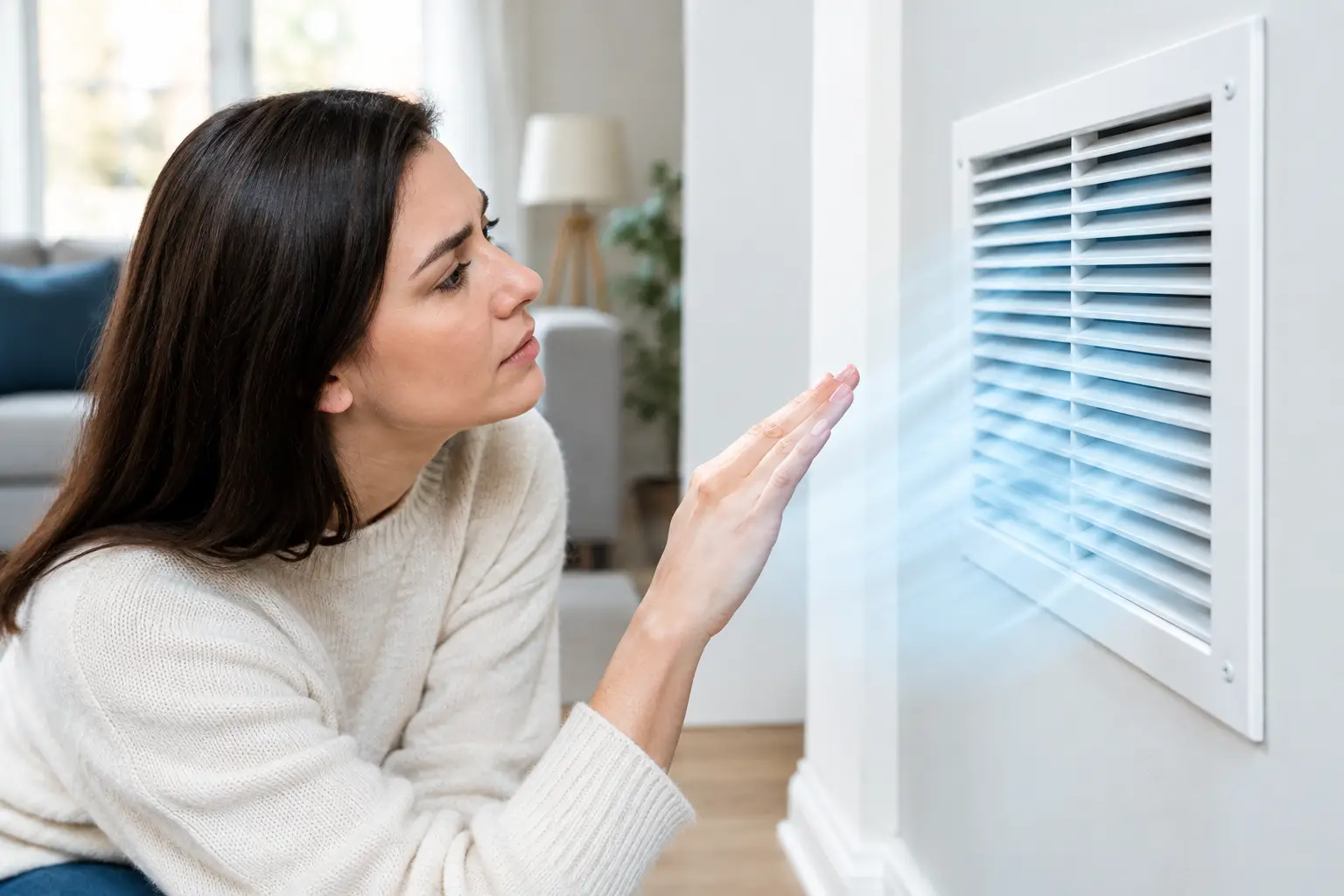
A vent that suddenly blows cool air while the thermostat is set to heat can turn a comfortable Kentucky evening into a scramble for blankets. If you are asking, “what causes cold air vents,” the answer may be something simple, such as a thermostat setting, or a warning that your furnace, heat pump, ductwork, or airflow needs professional attention.
The key is noticing when the air feels cold. A brief burst of cooler air at the beginning or end of a heating cycle can be normal. Cold air that continues to blow while your home gets colder is not. Here is how to tell the difference and what may be happening behind your vents.
What Causes Cold Air Vents When the Heat Is On?
Your heating system has to create heat, move it safely through the equipment, and distribute it through your home. A problem at any point can leave you with cold air from the registers. Some causes are safe to check from home, while others require a trained HVAC technician right away.
The thermostat is set incorrectly
Start with the simplest possibility. Confirm that your thermostat is set to Heat, not Cool or Fan Only. Then make sure the temperature setting is several degrees above the current room temperature.
The fan setting matters, too. When the fan is set to On, it runs continuously, including between heating cycles. During those off periods, it moves room-temperature or cool air through the ductwork. Set the fan to Auto so it runs only when the system is actively heating, unless you intentionally use continuous fan circulation for air mixing or filtration.
If the thermostat screen is blank, dim, or behaving oddly, weak batteries or a wiring issue may be preventing it from communicating correctly with the system.
Your furnace is not igniting or staying lit
For a gas furnace, cold air from the vents often means the blower is running but the burners are not producing heat. This can happen because of a dirty flame sensor, a failed igniter, a problem with the gas supply, or a safety switch shutting the furnace down.
Modern furnaces are designed to stop heating when they detect an unsafe condition. That is good protection for your household, but the blower may continue briefly to cool the system down. If you hear the furnace start and stop repeatedly, or it blows cold air after only a short run time, turn the system off and schedule service.
Never attempt to bypass safety switches or work on gas components yourself. If you smell gas, leave the home immediately, avoid switches and flames, and contact your gas utility or emergency services from a safe location.
A dirty air filter is restricting airflow
A clogged filter can create more trouble than most homeowners expect. When airflow is restricted, a furnace can overheat. Its high-limit safety switch may shut off the burners while the blower keeps running, which can feel like cold air coming from the vents.
Check your filter monthly during heavy heating and cooling seasons. If it is visibly gray, packed with dust, or overdue for replacement, install the correct size and type recommended for your system. Very high-efficiency filters can improve particle capture, but the wrong filter or one that is too restrictive for the equipment can reduce airflow. When in doubt, ask an HVAC professional which option fits your system and indoor air quality goals.
A heat pump is in defrost mode
Homes with heat pumps operate differently from homes with traditional gas furnaces. A heat pump collects heat from outdoor air and brings it inside, even when it feels chilly outdoors. In cold, damp Central Kentucky weather, frost can build up on the outdoor unit. The system occasionally enters defrost mode to melt that frost.
During defrost, the heat pump briefly reverses operation. You may notice cooler air at the vents, a whooshing sound outside, or steam rising from the outdoor unit. This usually lasts only a few minutes. Supplemental heat may come on to keep your home comfortable, but some temperature variation is normal.
If the air stays cold, the outdoor unit is coated in heavy ice, or the heat pump struggles to maintain the set temperature for hours, it may have a defrost control, refrigerant, airflow, or auxiliary heat issue. That calls for a professional diagnosis.
Airflow and Duct Problems That Make Rooms Feel Cold
Sometimes the heating equipment is working, but the warmth is not reaching every room evenly. This is especially common in rooms over garages, finished basements, additions, upstairs bedrooms, and older homes with leaky or poorly insulated ducts.
Leaky, disconnected, or uninsulated ducts
Ducts that run through an attic, crawl space, basement, or garage can lose a surprising amount of heat before air reaches the register. A disconnected duct may send heated air into an unconditioned space instead of your living room. Leaks also pull in cold, dusty air that lowers comfort and can affect indoor air quality.
Warning signs include one or two persistently cold rooms, weak airflow from certain vents, unusually high utility bills, and dusty areas around registers. Duct inspection and sealing can make a meaningful difference, though the best solution depends on the duct layout, insulation, and condition of the system.
Closed or blocked registers
Check that supply vents are fully open and not covered by rugs, furniture, curtains, or piles of laundry. Also make sure return grilles – the larger vents that pull air back to the system – are not blocked.
Closing multiple vents to force heat into other rooms is rarely a good fix. It can raise duct pressure, reduce airflow, and contribute to furnace overheating. If certain areas of your home are always uncomfortable, a technician can assess balancing, duct repairs, insulation gaps, zoning, or a ductless mini-split for the problem area.
The system is too small, aging, or poorly maintained
On the coldest days, a properly sized heating system may run for long stretches. That alone is not necessarily a problem. But if it runs constantly and never brings the home near the thermostat setting, the equipment may be undersized, losing efficiency, or dealing with an unresolved repair issue.
Age matters as well. Worn blower motors, failing capacitors, dirty burners, deteriorated heat exchangers, and weak heat pump components can all affect performance. Routine maintenance helps catch these concerns before a no-heat call on a freezing night.
Quick Checks You Can Safely Make First
Before calling for service, take a few minutes to check the basics. Make sure the thermostat is on Heat with the fan on Auto. Replace the filter if it is dirty. Confirm that the furnace power switch and breaker are on, and check that exterior heat-pump equipment is clear of leaves, snow, and other debris.
Then listen and observe. Is the system making repeated clicking or starting and stopping? Is airflow weak everywhere or only in one room? Does the furnace display a blinking diagnostic light? Those details can help a technician identify the issue faster.
Avoid repeatedly resetting breakers or cycling the thermostat over and over. If the system trips a breaker, makes burning or metallic smells, produces loud new noises, or blows cold air continuously, shut it down and request professional help.
When Cold Air From Vents Is an Urgent Problem
A cold vent is more than an inconvenience when temperatures drop. Call for prompt heating service if you have no heat, your indoor temperature is falling quickly, the furnace will not stay running, or you suspect a gas or electrical issue. Families with infants, older adults, pets, or anyone with health concerns should not wait for a complete heating failure.
For homeowners across Central Kentucky and Kentuckiana, Instant Aire Heating & Cooling can inspect the full picture – thermostat controls, furnace or heat pump operation, airflow, ducts, and indoor air quality – so the repair addresses the real cause rather than just the symptom. Same-day help is often possible when comfort cannot wait.
Your vents should deliver steady, dependable warmth when the temperature falls outside. If basic checks do not restore that cozy feeling quickly, getting the system checked early can protect your comfort, prevent added strain on the equipment, and help keep your home toasty and snug.